





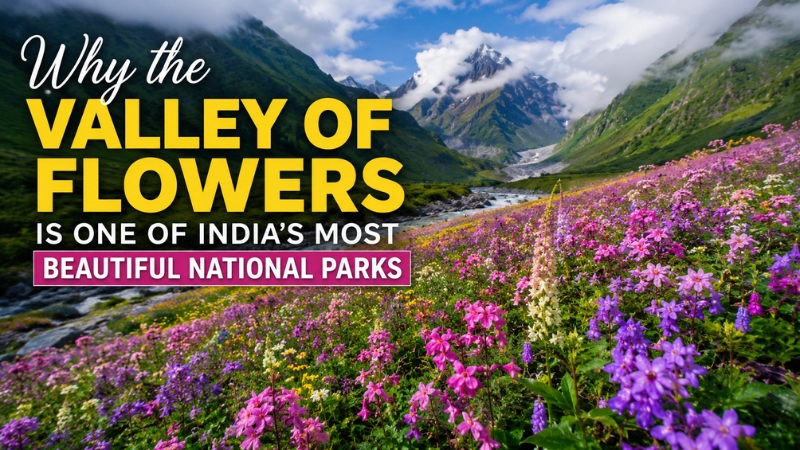
The Valley of Flowers National Park is one of India’s most spectacular natural attractions, offering visitors a breathtaking combination of colorful alpine meadows, snow-capped Himalayan peaks, and rich biodiversity. Located in the Chamoli district of Uttarakhand, this hidden paradise comes alive during the monsoon season when thousands of wildflowers bloom across the valley.
Recognized as a UNESCO World Heritage Site, the Valley of Flowers attracts trekkers, photographers, botanists, and nature lovers from around the world. Whether you are looking for an adventurous trek or a peaceful escape into nature, this remarkable destination offers an unforgettable experience.
Valley of Flowers National Park: An Introduction
Established in 1982, Valley of Flowers National Park covers approximately 87 square kilometers in the Western Himalayas. The park is known for its extraordinary collection of alpine flowers, medicinal plants, and rare wildlife.
The valley remains covered in snow during winter and transforms into a colorful paradise from June to September. During this period, over 600 species of flowering plants bloom naturally, creating one of the most beautiful landscapes in India.
Its untouched beauty and ecological significance make it one of the country’s most important protected areas.
Valley of Flowers – A Hidden Himalayan Paradise
The Valley of Flowers feels like a destination straight out of a fairy tale. Green meadows, sparkling streams, waterfalls, and colorful blossoms stretch across the valley, surrounded by towering Himalayan mountains.
Unlike many crowded tourist destinations, the valley maintains its peaceful atmosphere due to controlled tourism and conservation efforts. Visitors often describe the experience as magical because every step reveals new varieties of flowers and spectacular mountain scenery.
The untouched environment makes it an ideal destination for anyone seeking tranquility and natural beauty.
Valley of Flowers Uttarakhand: Where Nature Blooms in Full Glory
Situated in the Garhwal Himalayas, Valley of Flowers Uttarakhand trek lies at an altitude of around 3,600 meters above sea level.
The region experiences heavy snowfall during winter, while the arrival of monsoon transforms the valley into a vibrant carpet of flowers. The changing colors throughout the blooming season make every visit unique.
Besides flowers, visitors can enjoy crystal-clear rivers, glaciers, and panoramic Himalayan landscapes that showcase the incredible beauty of Uttarakhand.
Valley of Flowers India: A Must-Visit Destination for Nature Lovers
Among all Himalayan destinations, Valley of Flowers India stands out because of its unmatched biodiversity and scenic beauty.
Nature enthusiasts visit the valley to witness hundreds of rare flowers, alpine meadows, and peaceful surroundings that cannot be found elsewhere in the country.
Its unique ecosystem supports various endangered species and makes it one of India’s most valuable ecological treasures.
Valley of Flowers National Park Uttarakhand: Location and How to Reach
Valley of Flowers National Park Uttarakhand is located near Joshimath in Chamoli district.
The journey typically begins from Haridwar or Rishikesh before reaching Govindghat by road. From Govindghat, travelers trek to Ghangaria, the base camp for both the Valley of Flowers and Hemkund Sahib.
The final trek from Ghangaria to the valley is approximately 4 kilometers and offers stunning mountain views throughout the journey.
Valley of Flowers Travel Guide for First-Time Visitors
A good Valley of Flowers travel guide helps visitors plan a smooth trip.
Important points include:
- Carry waterproof clothing during monsoon.
- Wear comfortable trekking shoes.
- Start trekking early in the morning.
- Carry water bottles and light snacks.
- Respect park rules and avoid littering.
Mobile connectivity is limited, so downloading maps beforehand can be helpful.
Valley of Flowers Trek: Route, Distance, and Difficulty Level
The Valley of Flowers trek is considered moderately easy and suitable for beginners with average fitness.
The trek usually follows this route:
- Haridwar → Joshimath
- Joshimath → Govindghat
- Govindghat → Ghangaria (13 km trek)
- Ghangaria → Valley of Flowers (4 km)
The total trekking distance can be completed comfortably over two days while enjoying breathtaking scenery.
Best Time to Visit Valley of Flowers for Peak Blooming Season
The best time to visit Valley of Flowers is between July and August when the valley reaches peak bloom.
- June
Fresh greenery begins to appear.
- July
Thousands of flowers bloom across the valley.
- August
Peak flowering season with maximum floral diversity.
- September
Flowers begin fading while autumn colors emerge.
Most visitors prefer late July for the most vibrant landscapes.
Valley of Flowers UNESCO World Heritage Site: Why It Earned Global Recognition
The Valley of Flowers UNESCO World Heritage Site designation recognizes the park’s outstanding ecological importance.
The valley contains rare alpine ecosystems that support hundreds of endemic plant species and endangered wildlife. Conservation efforts have preserved its natural beauty despite increasing tourism.
Its exceptional biodiversity makes it globally significant for scientific research and environmental conservation.
Valley of Flowers Biodiversity: Rare Flora and Fauna You Can Spot
The Valley of Flowers biodiversity includes hundreds of plant species and several rare Himalayan animals.
Wildlife found here includes:
- Himalayan black bear
- Blue sheep
- Himalayan tahr
- Musk deer
- Snow leopard (rare sightings)
The rich biodiversity attracts botanists and wildlife researchers from around the world.
Valley of Flowers: Famous Species That Cover the Valley
The famous Valley of Flowers flowers include:
- Blue Poppy
- Cobra Lily
- Primula
- Anemone
- Potentilla
- Himalayan Daisy
- Marigold varieties
- Geranium
- Bellflower
- Brahma Kamal (near Hemkund Sahib)
Each month brings different blooming species, making every visit unique.
Valley of Flowers Tourism: Everything You Need to Know Before Visiting
Valley of Flowers tourism is carefully regulated to preserve the fragile ecosystem.
Visitors are required to:
- Purchase entry permits
- Follow designated trekking paths
- Avoid camping inside the valley
- Return before park closing hours
Responsible tourism helps protect this natural wonder for future generations.
Valley of Flowers Itinerary: A Perfect 3-Day Travel Plan
A simple Valley of Flowers itinerary could be:
- Day 1
Arrive at Govindghat and trek to Ghangaria.
- Day 2
Explore Valley of Flowers National Park.
- Day 3
Visit Hemkund Sahib and return.
Travelers with additional time can extend their stay to enjoy photography and birdwatching.
Valley of Flowers Opening Time and Visiting Hours
The Valley of Flowers opening time generally begins around 7:00 AM, and visitors are expected to exit the park by late afternoon, usually before 5:00 PM.
The national park remains open only during the summer and monsoon months, generally from June to October, depending on weather conditions.
Valley of Flowers Entry Fee and Permit Information
The Valley of Flowers entry fee varies for Indian and international visitors and is subject to periodic revision by the forest authorities.
Entry permits are mandatory for the Valley of Flowers National Park. Base entry fees are ₹200 for Indian nationals and ₹800 for foreign passport holders (valid for 3 days), plus a ₹50 fee for each additional day. Children under 12 enter for free.
Visitors should carry valid identification and keep their permits safe throughout the trek. Booking accommodations in advance during peak season is highly recommended.
Valley of Flowers Travel Tips for a Safe and Comfortable Journey
Useful Valley of Flowers travel tips include:
- Carry rain protection.
- Pack warm clothing.
- Stay hydrated.
- Bring basic medicines.
- Wear trekking shoes with good grip.
- Start trekking early.
- Avoid plastic waste.
- Follow forest department guidelines.
Preparation ensures a comfortable and memorable journey.
Why Is Valley of Flowers Famous Around the World?
Many travelers ask, “Why is Valley of Flowers famous?”
The answer lies in its incredible natural beauty, rare Himalayan flora, rich biodiversity, and UNESCO recognition. Every monsoon, the valley transforms into a colorful paradise that attracts visitors from across the globe.
Its untouched ecosystem and spectacular mountain scenery make it one of the world’s finest alpine landscapes.
Why Visit Valley of Flowers National Park at Least Once in Your Lifetime?
If you’re wondering why visit Valley of Flowers National Park, the reasons are endless.
From colorful meadows and peaceful trekking trails to rare wildlife and breathtaking Himalayan views, every moment spent here feels magical. The valley offers an escape from busy city life and reconnects visitors with nature.
It is a destination that leaves lasting memories for photographers, trekkers, families, and adventure seekers alike.
Valley of Flowers National Park Travel Guide: Complete Planning Checklist
A complete Valley of Flowers National Park travel guide should include:
- Trekking shoes
- Raincoat
- Backpack
- Warm jacket
- Water bottle
- Energy snacks
- Camera
- Personal medicines
- Government ID
- Cash for local expenses
Good preparation makes the journey enjoyable and hassle-free.
Best Places to Visit in Uttarakhand Along with Valley of Flowers
Some of the best places to visit in Uttarakhand alongside the Valley of Flowers include:
- Hemkund Sahib
- Joshimath
- Auli
- Badrinath
- Mana Village
- Rudranath
- Nanda Devi Biosphere Reserve
Combining these destinations creates an unforgettable Himalayan vacation.
Valley of Flowers UNESCO World Heritage Site: Conservation and Ecological Importance
The Valley of Flowers UNESCO World Heritage Site is not just a tourist destination but also a vital ecological reserve.
Strict conservation policies help preserve its fragile ecosystem, rare plant species, and endangered wildlife. Sustainable tourism plays an essential role in maintaining its pristine beauty.
Protecting this valley ensures future generations can experience one of nature’s greatest masterpieces.
Things to Do in Valley of Flowers Besides Trekking
There are many things to do in Valley of Flowers beyond trekking:
- Nature photography
- Birdwatching
- Wildlife spotting
- Botanical exploration
- Landscape painting
- Meditation in nature
- Visiting nearby waterfalls
- Exploring Himalayan flora
Each activity allows visitors to appreciate the valley’s extraordinary beauty from a different perspective.
Final Thoughts: Why Valley of Flowers National Park Deserves a Spot on Your Bucket List
The Valley of Flowers National Park is more than just a trekking destination—it’s a living masterpiece of nature. Its vibrant alpine meadows, diverse wildlife, pristine mountain landscapes, and peaceful atmosphere make it one of India’s most extraordinary national parks. Whether you’re planning your first Himalayan adventure or returning to experience its seasonal blooms again, the valley promises unforgettable memories.
If you love nature, photography, adventure, or simply want to witness one of the most beautiful places on Earth, Valley of Flowers National Park deserves a top spot on your travel bucket list.
Frequently Asked Questions (FAQs)
Where can I find the best Valley of Flowers National Park photos?
You can find stunning Valley of Flowers National Park photos on official tourism websites, travel blogs, and photography platforms. The best pictures are usually captured during July and August when thousands of alpine flowers bloom across the valley.
What is the Valley of Flowers National Park best time to visit?
The Valley of Flowers National Park best time to visit is from mid-July to mid-August, when the valley is covered with colorful wildflowers. The park generally remains open from June to October, but peak blooming occurs during the monsoon season.
Valley of Flowers National Park is in which district?
If you’re wondering Valley of Flowers National Park which district it is located in, the answer is Chamoli district in the state of Uttarakhand, India. It lies within the Western Himalayas and is part of the Nanda Devi Biosphere Reserve.
What is the Valley of Flowers National Park location?
The Valley of Flowers National Park location is in the Garhwal Himalayas of Uttarakhand, approximately 20 km from Govindghat and accessible via Ghangaria village. The park sits at an altitude of around 3,600 meters above sea level.
Valley of Flowers National Park is famous for which animal?
Many people ask, Valley of Flowers National Park is famous for which animal? The park is known for rare Himalayan wildlife, including the Snow leopard, Himalayan musk deer, Himalayan black bear, blue sheep, and Himalayan tahr. Although sightings are uncommon, these species make the park an important wildlife habitat.
How difficult is the Valley of Flowers National Park trek?
The Valley of Flowers National Park trek is considered moderately easy and suitable for beginners with average fitness. The trek starts from Govindghat to Ghangaria (about 13 km) and then continues for another 4 km to the valley, offering breathtaking Himalayan views throughout the journey.
What is the Valley of Flowers National Park opening date each year?
The Valley of Flowers National Park opening date is usually around 1st June every year, depending on weather conditions and clearance by the forest authorities. The park generally closes in early October due to snowfall and changing weather.
How many days are enough to explore Valley of Flowers National Park?
Most travelers spend 2–3 days exploring the Valley of Flowers National Park, including the trek from Govindghat to Ghangaria and a full day inside the valley.
Do I need a permit to visit Valley of Flowers National Park?
Yes, visitors must obtain an entry permit before entering Valley of Flowers National Park. The permit can be purchased at the park entrance near Ghangaria and is mandatory for all visitors.
Which city is closest to Valley of Flowers?
The closest major town to the Valley of Flowers is Joshimath, located about 20 km from Govindghat, the starting point of the trek. From Joshimath, travelers can drive to Govindghat and then trek to Ghangaria before entering the national park. Joshimath serves as the main gateway for visitors exploring the Valley of Flowers and nearby attractions like Hemkund Sahib and Auli.
Which is the best time to visit the Valley of Flowers?
The best time to visit the Valley of Flowers is from mid-July to mid-August, when the valley is at its peak bloom. During this period, thousands of colorful alpine flowers cover the meadows, creating breathtaking landscapes. Although the park remains open from June to early October, July and August offer the most vibrant floral displays and pleasant trekking conditions.
Can I visit the Valley of Flowers without trekking?
No, you cannot visit the Valley of Flowers without trekking. The park is accessible only on foot. Visitors must first reach Govindghat by road, trek approximately 13 km to Ghangaria, and then complete another 4 km trek to the Valley of Flowers entrance. While ponies and helicopter services are available up to Ghangaria (subject to availability and weather), the final stretch inside the national park must be explored on foot.